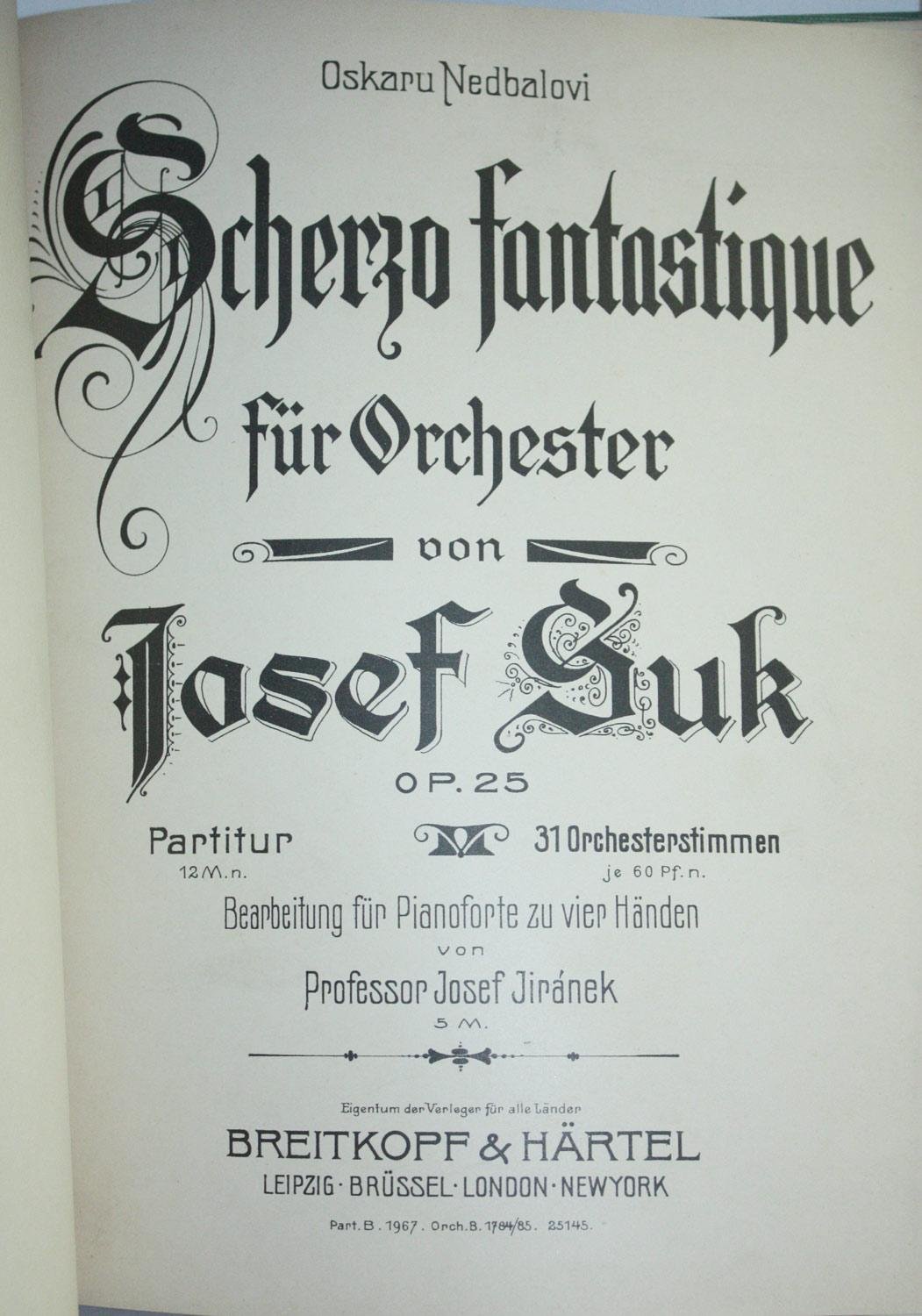
It was love at first sight—or hearing—for me with Josef Suk’s Scherzo fantastique, a lively 15-minute composition that bears a stylistic resemblance to my other faves, Khachaturian’s Masquerade waltz and Saint Saëns’ Danse Macabre, not to mention elements from Dukas’ The Sorcerer’s Apprentice, which I blogged about HERE. But only when I started delving deeper into research for a blog on Scherzo fantastique (note: the French and Czech style of writing calls for only the first letter of a title to be capitalized) did I realize that similar-sounding compositions abound. Turns out, a “scherzo fantastique” was an actual style in composing in the 19th century.
The word “scherzo” derives from the original German “Scherz,” meaning a joke or jest. In classical music, it’s a playful, vigorous style, usually in a triple meter (like a waltz), and has a strong rhythmic drive (Khachaturian’s Masquerade waltz is so very much this). The “fantastique” part refers to a fantastical, supernatural or touched with the bizarre (think Berlioz’s Symphony fantastique which I blogged about HERE). The Romantic era seemed to harbor a fascination for the otherworldly, usually dark or eerie, and yet still beautiful.
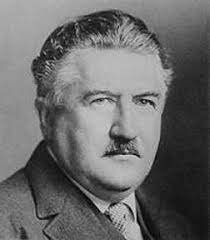
Josef Suk was born January 4, 1874, in Křečovice, in what is now Central Bohemia. Having shown early signs of musical prodigy (childhood mastery of violin, piano and organ, taught by his father, the village schoolmaster and choirmaster), he left home at eleven, having gained admission to the prestigious Prague Conservatory. There, Antonin Dvořák would eventually become his composition teacher, and roughly a dozen years later, his father-in-law. Marriage to Dvořák’s eldest daughter, Otilie, brought a period of happiness and prosperity to the extended family that in no time extended by one more (Otilie gave birth to a son in 1901). This mood is what’s reflected in his Scherzo fantastique.
The piece begins its first musical theme with woodwinds. It’s more of a “setting the scene” kind of start, particularly when you compare it to Khachaturian’s glorious waltz that competes with Suk’s masterpiece for the most joyous and invigorating music ever, that makes my inner dancer burst out and into a tombé-pas de bourrée-glissade-grand jêté leap out of sheer happiness. (It’s a ballet-dancer thing. I was even caught on film doing it.)
But I digress. We were talking about those the woodwinds. Soon comes a conversation with the strings—a deep, authoritative sound from the cellos—that challenges the woodwinds, a back-and-forth retort, until the strings win and launch into the most glorious sweeping melody, that, once heard, you will never, ever forget. The richness of the music here is like melted chocolate. Or caramel. Sensuous, seductive, wildly satisfying, and how happy it all sounded and made me feel. That very first time, it latched onto my heart, stole my breath, and has never moved far from my affections. (Regarding the “happiness” factor, it beats the Khachaturian, hands down.)
Of course a fifteen-minute orchestral composition can’t be all melted chocolate and happiness, and while part of me wants that section to go on and on, I accept that three themes necessarily keeps this kind of thing going strong. So, here you have theme one and two going back and forth for a while. Midway comes a new theme, that seems to tell a story. Flutes now, like the most exquisite birdsong. Soon a clarinet joins in. They seem to pose a question, that becomes a more complicated one, the whole orchestra growing involved (which ultimately includes horns, trumpets, trombones, tuba, timpani, percussion and a harp, atop the woodwinds and strings).
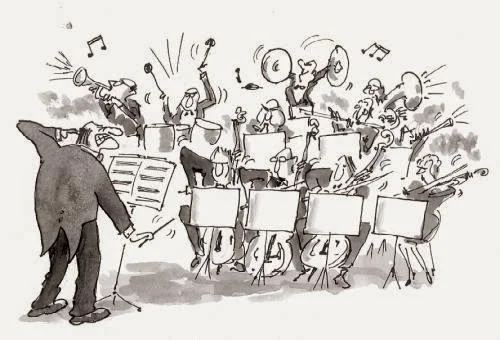
The answer appears to be complex, possibly troubling. (Remember that a scherzo fantastique tends to have a darker, ghoulish facet, so this fits the bill.) Then, to make it fun, the whole question-and-answer conversation crescendos amid a boisterous full-orchestral accompaniment. And ooh, here comes that unforgettable second-theme melody again.
Never have I had the feeling of aural Sensurround, being swept up by music on all sides, feeling dizzy with the pleasure of it. (I think I’m making it abundantly clear that this is one of the most sensual pieces of classical music I’ve ever heard, and if you’re more a clean-cut purist about classical music, I hope you’ve forgive me for my foray into the land of sensory and sensual stimulation. Me, I’m having a ball.)
The last quarter of the Scherzo fantastique grows more chaotic and dissonant, the themes now crashing about, jockeying for position, along with the crescendoing orchestra, over who gets to land the plane.
Enough talking. Give it a listen.
Stunned you with its lyrical melody line, its wit and originality and orchestral colors, didn’t it?
I guess we need to talk about the sadder stuff now. The year after Scherzo fantastique was composed, in spring of 1904, Josef’s beloved teacher and father-in-law became ill from influenza and died from complications five weeks later. Dvořák’s unexpected death at the age of 62 elicited national mourning, and a deeply painful and personal sorrow for Josef. He began to compose a symphony to honor his father-in-law’s life and passing. Around this time, Suk’s Scherzo fantastique premiered to great acclaim in Prague, on April 18, 1905. You’d think the two profound events would balance each other out, but then his beloved Otilie died on July 5 from heart failure (she’d had a congenital heart defect). She was only 27.
And the mourning multiplied by ten.
The Scherzo fantastique remains there at the cusp, a composition from the happiest years of Suk’s life, just before descent into the most tragic and introspective. It would forever change the sound and direction of his compositions, starting with the symphony he’d been working on. Three movements had been completed; now, instead of the happier perspective he’d planned for the final movement, he channeled his grief for his wife’s loss into two new movements, ultimately producing a searing, acclaimed masterpiece, his “Asrael” Symphony (“Angel of Death”), which he dedicated “to the exalted memory of Dvořák and Otilie.”
Pretty heavy stuff. I tried to listen to the Symphony while researching this, and found I couldn’t get through it, masterpiece though it surely is. Life feels heavy enough these days as is. I’m certain it will call my name one day in the future. Death and grieving are, after all, a fact of life, and classical music is such sweet solace.
In the meantime, here’s a list of 10 of Suk’s acclaimed works, although I’m sure many a Suk fan will squawk that I missed their favorite piece. I’ve included the opus number so that you can gauge where he was in his life and his composing. (Opus 25 is the Scherzo fantastique.) Admittedly, I have favored the cheerier works, that risk not revealing his full musical maturity. (For that, I will suggest The Ripening, a symphonic poem, Op. 34, or The Epilogue, another symphonic poem, massive in scope and scale, examining human life, love, celebration, the fear of death and the inevitability of it.)
Classical Girl’s top 10 picks
- Piano Quartet Op. 1
- Serenade for Strings Op. 6
- “Song of Love” Op. 7 (see below)
- Symphony No. 1 Op. 14
- Fairy Tale Op. 16
- 4 Pieces for Violin and Piano Op. 17
- Fantasy for Violin and Orchestra Op. 24
- Scherzo fantastique Op. 25 (see above)
- Symphony no. 2, “Asrael” Op. 27
- A Summer’s Tale Op. 29
A few thoughts …
- I’m absolutely loving Symphony No. 1, three days into hearing it for the first time.
- A thumbs’ up for Serenade for Strings — which admittedly sounds like Dvořák from time to time, but hey, Suk was young, learning from the master, so that’s cool because I love both composers.
- Fairy Tale opens as lovely and evocative as its name alludes, but it carries bite and drama too, throughout its 30 minutes.
- 4 Pieces for Violin and Piano is distinctly Suk and no sign of Dvořák’s influence like in the Serenade. In truth, it sounds to me more like Fauré or even Ravel.
- The Fantasy for Violin and Orchestra starts off quite stormily. At times, I feel like I’m listening to Bartok. The charming thing here is that the violinist (in the recording linked above) is Josef Suk, the composer’s grandson.
- I really wanted to love A Summer’s Tale, having heard great things about it. I tried three times, but I just wasn’t feeling the lov. I’ll give it a year’s time and try again.
I couldn’t not feature the charming “Song of Love” that was most likely intended for Otilie, Dvořák ’s eldest daughter and Suk’s future. This was composed in 1893 while the Dvořák family lived abroad, in New York City, where Antonin Dvořák was serving as director of the National Conservatory of Music of America. Josef was only 18 and had fallen in love with Otilie just before the family’s departure. True Love speaks — or here, it positively sings. An extra perk is this recording, performed by violin legend and master, Henryk Szeryng.
There’s so much more I’d like to share about Josef Suk: his famed violinist virtuoso grandson of the same name; the fact that the elder Suk founded the Czech String Quartet while composing and raising his and Otilie’s son (also a Josef Suk) and performing over 4000 concerts in 20 European countries; and that he was an Olympic silver medalist (right??!) Maybe another day, another blog. Maybe when I get brave enough to delve into his post-Otilie years of composing. In the meantime, I have his Scherzo fantastique to warm my heart and my spirits. Today I need no more than that.
Excelentl post. I’ve been playing the Fairy Tale , coupled with the Scherzo fantastique, back to back for the last week, the latter is the ultimate ear worm. I think its affecting me. I just ordered 4 more LP’s from a seller in Germany (I’m in the UK) including the Summer tale, first symphony, Prague Tone poem and Ripening . His music is wonderful
Ooh, I love everything you wrote, Jonathan! I think it’s time for me, too, to delve into “Ripening.” Thanks for leaving your comments!