I have a new classical-music Halloween fave this year: Carmina Burana. The irony is that it’s been on my Top 10 Halloween classical list for a dozen years, hiding in plain sight. The truth is, I never listened to the whole shebang, only the first four minutes. (I know. Some classical-music expert I am, huh?) I’d added Carl Orff’s work to the list based entirely on its theatrical, unforgettable opening song, “O Fortuna.” You know it. Everyone does. Even if they didn’t realize they’d already heard it. (I have another confession here, further damaging my Classical Girl cred, but you have to scroll to the bottom to read about it.)
Anyway, I’m crazy about “O Fortuna,” which is a perfect fit for Halloween. Why don’t we start right there?
Did you recognize it? I see lots of you nodding your heads. Do you know the rest of work? I wonder how many people, like myself, have only listened to “O Fortuna” and nothing more? Anyway, with Halloween just around the corner, I made it my goal this year to listen all the way through and thoroughly educate myself on it and its composer.
Carl Orff was born on July 10, 1895 in Munich, Germany. His father was a military officer with strong musical interests, and his mother was a gifted pianist who recognized and encouraged the young Carl’s talent from an early age. He went on to study at the Munich Academy of Music where he studied composition and piano. He later gained practical experience in the theater, first as a rehearsal pianist and then as a Kapellmeister (music director) and conductor.
Orff was a dedicated pedagogue, as well, co-founding the Günther-Schule in Munich in 1924. The school combined gymnastics, rhythm, music and dance. Orff firmly believed that music integrated with movement, speech, and play offered children a particularly meaningful music education. This became the basis of the highly influential Orff Schulwerk (Schoolwork) program, which is still used around the world today. People who’ve never heard Carmina Burana, never even heard of it, know Orff from his Schulwerk program and his later Musik für Kinder volumes.
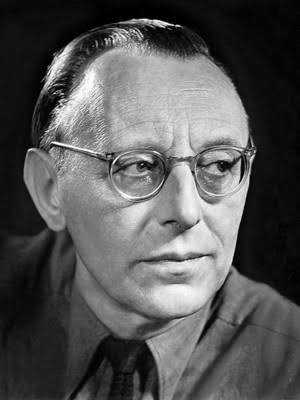
As a composer, his output is on the small side. Before Carmina Burana, Orff had written and published lieder (songs), choral compositions, and larger works, but after the great success of Carmina, he wrote to his publisher at Schott Music, saying, essentially, ‘Everything I have written to date, and which you have, unfortunately, printed, can be destroyed. With Carmina Burana, my collected works begin.”
Carmina Burana draws on 24 selected texts from a medieval manuscript of the same name, a collection of over 300 poems, songs and other texts dating from the 13th century. Written primarily in Latin, with some Middle High German and Old Provençal (think French-but-not), the manuscript turned up in 1803 at the Benedictine monastery of Benediktbeuern that gave the manuscript its name. (“Carmina Burana” roughly translates as “Songs from Beuern.) Scholars believe it was compiled elsewhere, likely in South Tyrol around 1230, but how it reached the abbey is uncertain. Most of the poems are anonymous, but they’re tied to the goliards—wandering students and clerics who loved to toast life’s earthier pleasures: drinking, gambling, spring, and lust.
The latter is what you should be most aware of: this is a bawdy, eye-raising, lusty, violent (if you’re a swan about the become dinner) cantata. Banish any image from your mind of those lovely Bach cantatas you might have heard. Carmina Burana is something entirely different.
Time to jump into it.
There are two versions I’m featuring, both of which do a great job of sinking you into this work, in two different ways. The first one is the standard cantata, the version most seen in concert halls. It’s top-notch. The second one is a 1975 film by opera and film director Jean-Pierre Ponnelle and it’s wonderfully theatrical. Orff would have loved it. His premiere of the work in 1937 was as a “scenic cantata,” its full title reading Carmina Burana: Cantiones profanae cantoribus et choris cantandae comitantibus instrumentis atque imaginibus magicis (“Songs of Beuern: Secular songs for singers and choruses to be sung together with instruments and magical images”). But costumes, choreography, and “magical images” proved way too expensive for the post-WW II concert halls to retain, even as the production’s popularity grew and grew. Performed simply as a standard cantata, the administrators came to discover, they could still sell out the house, at much less cost for them. Win!
Let’s start with the WDR Symphony Orchestra’s cantata, conducted by Cristian Măcelaru, with soloists Markus Werba, Sarah Aristidou and Wolfgang Ablinger-Sperrhacke). It’s first-class. Below the embed is a road map I created so that I could keep up with the cantata while having an idea what they’re singing about (all the more reason to watch the Ponnelle film right afterward, for the “aha!” experience). Note that in both versions, No. 12, in which the aforementioned swan sings a lament as he is being roasted for dinner, is a must-watch. In the WRD’s production, it’s particularly entertaining to watch children from the choir sit and react (or not) to tenor Markus Werba’s as the swan. You can find that spot at 31m47. (For the film version, it can be found at 30m58 on the embed below this embed. Warning: watching it may give you bad dreams.)
Classical Girl’s Road Map
Fortuna Imperatrix Mundi (Fortune, Empress of the World)
- No. 1: O Fortuna – Fortune’s wheel is turning and no one can stop it.
- No. 2: O Fortune plango vulnera – Fortune works both ways, alas.
I. Primo vere (Spring)
- No. 3: Veris leta facies – Spring! Things coming to life again.
- No. 4: Omnia sol temperat – With warmth spreading, the baritone’s longing turns to love.
- No. 5: Ecce gratum – The men and women celebrate spring, eye each other. Game on!
Uf dem anger (On the Green)
- No. 6: Tanze – Fun music, the only instrumental song. Plus a dance that gets pretty lively.
- No. 7: Floret silva – The forest blooms, the men leave, the women query why. Then … reunion!
- No. 8: Chramer, gip die varwe mir – the females buy makeup to win the males’ attention.
- No. 9: Reie – “The ones dancing here are all maidens who, for the whole summer, want to be without a man,” is the text translation, but their behavior sure has pointed to otherwise.
- No. 10: Were diu werlt alle min – The choir sings of a lovesick male who fantasizes about someone far out of reach.
II. In taberna (In the Tavern)
- No. 11: Estuans interius — The baritone sings that he is restless, drifting, more interested in pleasure than salvation.
- No. 12: Olim lacus colueram – My absolute fave, a roasting swan lamenting his fate.
- No. 13: Ego sum abbas – A drunken abbot sings and gets the whole crowd in a party mood.
- No. 14: In taberna quando sumus – The whole chorus joins in and raising toasts to all.
III. Cour d’amours (The Court of Love)
- No. 15: Amor volat undique – Finally, the children’s choir, and a gentle orchestral accompaniment. Also a beautiful soprano solo. And … love?
- No. 16: Dies, nox et omnia — The baritone laments everything is against him, and only a kiss from the woman he pines for would fix it. Wow, what a range required—low bass to high tenor.
- No. 17: Stetit puella – Another solo, this time the soprano, plaintive and rich.
- No. 18: Circa mea pectora – The man’s heart is “churning with sighs and love’s torment.” In the film, he’s just determined to get into his beloved’s sanctuary. (Oh, shockingly phallic. Blushing.)
- No. 19: Si puer cum puellula – Now the other men—a sextet?—conspire with him, finding their way into the sanctuary. Hoo boy. Dancing, flirting, women versus men, everyone grinning.
- No. 20: Veni, veni, venias – The beloved’s solo. “Come to me or I’ll die!”
- No. 21: In trutina – “Torn between yes and no, she yields … but not just yet.”
- No. 22: Tempus et iocundum – A wrestling match between the two of them (in the film) – fun! At the end, wow what a high note for the soprano. With that, she yields.
- No. 23: Dulcissime – Now he worships her, literally, on his knees (good!), her in goddess attire.
Blanziflor et Helena
- No. 24: Ave formosissima – “A hymn of praise to ideal beauty, comparing the beloved to Blanziflor, Helen of Troy, and Venus.”
- No. 25: O Fortuna –The Wheel of Fortune is back, to spin yet again, and again.
And now here’s the film version by opera and film director Jean-Pierre Ponnelle, featuring soloists Lucia Popp, Hermann Prey and John van Kesteren. Head’s up, again, that this film is sensual and sexually suggestive. An early-on phallic symbol had me downright blushing. There’s drunkenness, licentiousness. But, I gotta say, it brings the medieval Carmina Burana manuscript and its era to life. I can almost see those goliards in a tavern, busily penning their words over their tankards of ale.
And finally, that confession I mentioned in my opener …
Okay, so, along with my confession that I’d only listened to three minutes of a sixty-minute major work that I’d recommended on a Top 10 list, I will admit that I thought “O Fortuna” itself came from the 2000 Enigma album, The Screen Behind the Mirror (created, composed and created by Michael Cretu). The album is stunning; keep scrolling down to hear the song that uses “O Fortuna.”
I only discovered my mistake thirteen years later when I was attending/reviewing a Smuin Ballet performance. Even the name “Carmina Burana” was throwing me off. While my eyes saw “Carmina Burana” on the program, my brain was thinking , improbably, “Carmen Miranda.” So I was all set for a ballet featuring a Brazilian bombshell wearing a towering, fruit-laden turban, the ensemble behind her doing samba as she sang. The auditorium lights went down, the stage lights glowed red, and the music began. You can bet I had two big surprises at that moment: no to the Enigma album using original music, and no, this was no samba-infused tribute to a Brazilian dancer and her fruit-laden hats.
Live and learn. Here is “The Gravity of Love,” and note that “O Fortuna” has been threaded into the entire album. Really a unique album and well worth a purchase.
And Happy Halloween 2026!
I know Carmina very well having danced in the first production of Fernand Nault’s ballet early in my career. My partner was a guest from ABT – so exciting. Not one of us had heard the music at the time, but so many dancers went to the music store to find the record (years ago, obv), that they started stocking it. I have to think we were at the forefront of its popularity. Mr. Nault took it to Les Grands Ballets Canadiens and I got to see the premiere. The roasted swan! In Tritina – which can make the top of your head blow off with longing and joy. Mr. Nault shouting, “dance with champagne in your eyes.” Such memories!
I’ve come back to say if you put “fernand nault’s carmina burana” in your search engine, you can see two excerpts from the ballet. Sadly, no In Trituna!
Terri, this reply is thrilling! I’m sooo grateful you took the time to share it. Your recollections just fascinate me.
Oh, what a delight to have this to enjoy today. And such an interesting history. So glad you choose it for Halloween.
K
Kathleen – see the end of my comment below. 🙂
Nettie
Terez – If I could only add a few photos and videos to this excellent post! I took in a performance of this intriguing work 14 years ago this month at Royal Albert Hall, the main draw for me being Camille Saint-Saëns‘ Symphony Number 3 With Organ.
All I knew about Carmina Burana was that the name sounded familiar. And of course as the performance began, I recognized Oh Fortuna. The voices of the 300 member choir filled the hall, matching the power of the orchestra. I was terezmerized on the spot.
As I learned from the program that the songs came from stories and texts from possibly as early as the 11th and 12th century, my imagination caught fire.
Each piece its own story and each story matched perfectly with the music, the performance held me spellbound. I recall the agony of that poor goose (no swan in this rendition) roasting on a spit. The song and score’s dissonance fit perfectly.
I’m going to send you a video of the knock-your-socks-off finale, illicitly taken by yours truly. After I watch it about seven times.
Fun side note: It was during this visit to London, on Halloween night after a delicious Indian dinner with two favorite Indian friends, that I was delighted to come across Kathleen Avenue in the Borough of Brent.)
Kathleen, yes, and yes! (I am SO pouring myself a glass of red on Halloween night, lowering the lights and watching that film again. Might have to make it an annual event.)
And Annette, I loved your personal recounting. So thrilling that you got to discover this work where it is best encountered – in a live performance. So enjoyed experiencing it through your eyes/words.
I not only have listened to Orff’s Carmina Burana, I’ve even performed it, with the Napa Valley Chorale, in Orff’s arrangement for two pianos and percussion (for amateur groups that can’t afford an orchestra!). Can’t see how the work has anything at all to do with All Hallows’ Eve—the vigil of All Saints’ Day. Great concert performance in the embedded video, though.
The movie is so “1970’s.” In that fun, but slightly jarring way which the original “Jesus Christ, Superstar” feels like, 50+ years on…
The “Electro-Medieval (Mittelalter-Elektronik)” and “Medieval Metal/Medieval Rock (Mittelalter-Rock)” genres originating the Germany in the 1990’s have used the poetry of Carmina Burana extensively, including some of the poems on sacred, rather than profane themes. I discovered these three bands many years ago, and am a big fan. I hope other readers will look them up. I think you’ll be surprised how good they are. These tracks are all based on Carmina Burana:
Qntal IV–Flamma
Helium Vola “Liod”—Vagantenbeichte:
The original, known as the “Archpoet’s Confession,” is about how celibacy is a tough row to hoe.
And for a Heavy Metal take:
In Extremo—Omnia Sol Temperat
In Extremo—Totus Floreo:
This acoustic version uses the original melody from the Carmina Burana manuscript. Who knew that bagpipes were the perfect rock-and-roll instrument?
You can recognize the lyrics from Orff’s No. 22, Tempus et Iocundum in Flamma.
Steve, what a treasure trove your reply is! Can’t wait to check out the links. Particularly the Heavy Metal take, as my son is a real metalhead and he indoctrinated me into the club (the only grey-haired women at a half-dozen death and/or thrash metal concerts).
And on the following: “The “Electro-Medieval (Mittelalter-Elektronik)” and “Medieval Metal/Medieval Rock (Mittelalter-Rock)” genres originating the Germany in the 1990’s have used the poetry of Carmina Burana extensively,” I’m going to share this with my son. It’s a toss-up whether he knows about them already or not. It’s sure new to me.
Late edit: sadly, I had to delete the links you provided in order to keep my site safe and secure. But I encourage all readers to check out the titles directly on YouTube. I especially enjoyed the band that featured bagpipes as well. Great raucous fun!