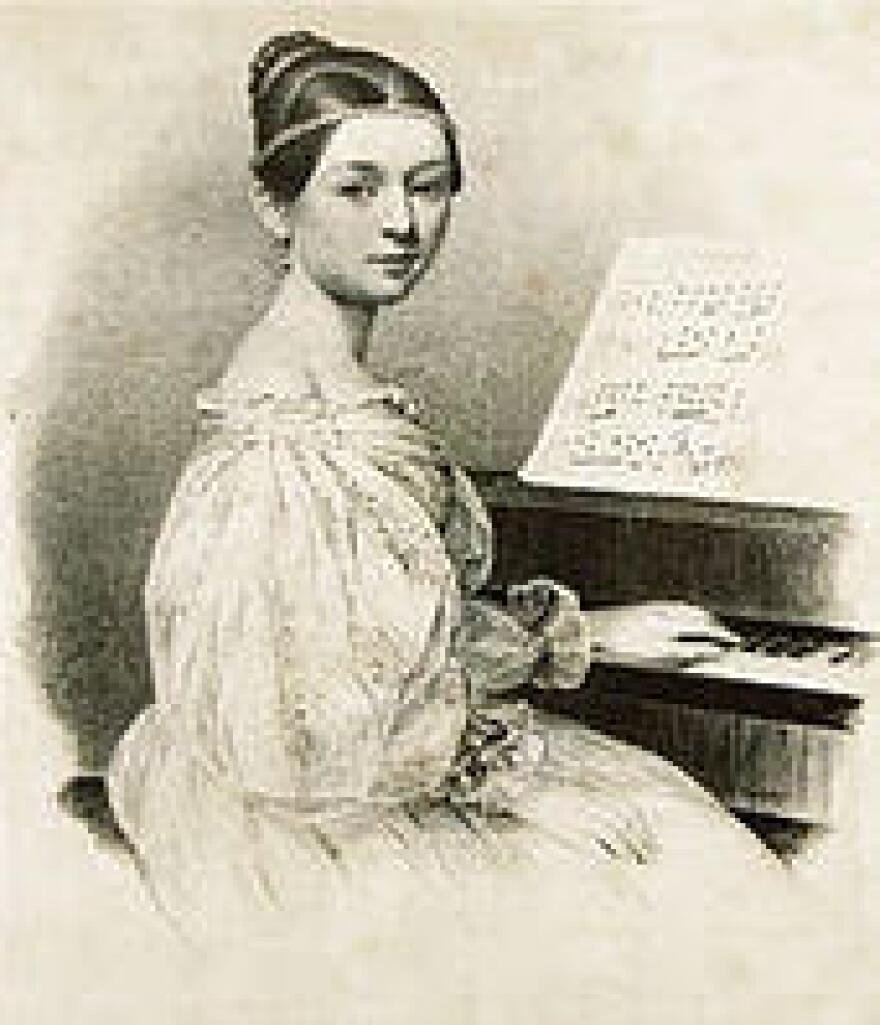
The only reason I chanced upon Clara Schumann’s compositions was a recent YouTube playlist suggestion, which sent my thoughts in two directions. First, I thought, “Shouldn’t I have heard her music live in my twenty-plus years as a San Francisco Symphony subscriber? What’s up with that? Why do her works continue to be unappreciated and rarely performed in concert halls?” My second thought was cheerier. “How wonderful that YouTube gives all listeners equal access to discovering lesser-known composers like Clara Schumann and her delightful compositions. And how cool that they suggested it for me.”
It seems we can all use a little extra cheer in life these days, so let’s stick with the enthusiastic, positive angle of the second thought. After all, what fun, to get other people interested in and excited about Clara Wieck Schumann, child prodigy, piano virtuoso, mother of eight, wife and partner to the better-known Robert Schumann. What a thrilling discovery for me at age 63. The above-mentioned playlist focuses on Clara’s piano works and includes romances, waltzes, polonaises, sonatas, études, beautifully rendered by pianist Jozef De Beenhouwer. They are all a delight, with their thoughtful melodies, rich textures and phrasings, lyricism and touches of wit.
Give the playlist a listen as you read. I’ve been listening to it almost exclusively over the past month while researching and writing about Clara. It’s so delicious and varied and even after a month of listening to it for hours on end, it hasn’t bored me in the least.
Clara Wieck was born in Leipzig, Germany, on September 13, 1819. Her mother, Marianne Tromlitz, was a pianist and gifted singer, who’d married her piano teacher (twelve years her senior), the charismatic but mercurial Friederich Wieck. Wieck came from humble origins, was largely self-taught on the piano, a theologian by degree and a private tutor by trade, reinventing himself at age thirty as a piano-store owner and piano teacher. Five children followed his marriage to Marianne, in rapid succession. Clara was the second child (but first-born Adelheid died before Clara was born). The marriage was short-lived, with Marianne unable to tolerate the challenges of life with the domineering Friederich. She fled to her parents’ home, taking four-year-old Clara and her infant son, leaving her two older sons behind. Saxon law of the time granted custody to the father (children were considered property) after age five. From the day of Clara’s return after her fifth birthday, Friedrich embarked upon his life’s most important work: turning his daughter into a musical prodigy.
All of it worked. Her public debut at the Gewandhaus on Oct 20, 1828 was hailed as a success. She was nine. Her bigger performance was her solo debut, when she was eleven, to even more acclaim. Europe adored her. Everyone wanted to meet her and hear her play. Her compositions, mostly short piano pieces that she performed in her own recitals were proving to be genuinely impressive, even when not taking into account her age and gender. She performed, at age fourteen, a single-movement section that would become her acclaimed Piano Concerto in A minor (she continued work on the concerto and completed it just before her 16th birthday) and premiered the full concerto as soloist with the Leipzig Gewandhaus Orchestra, conducted by Felix Mendelssohn.
Robert Schumann met Clara when she was nine, following her 1828 debut at the Gewandhaus. He was nineteen, a university student in law, grappling with the decision to drop his studies and pursue becoming a professional musician and composer. He sought out Wieck for piano lessons, and soon Robert was coming to the Wieck house on a daily basis.
Robert initially had an excellent relationship with Friedrich Wieck, who even invited Robert to join the family household for a year. The household itself was growing, courtesy of a second wife, Clementine (another piano student, this one nineteen years his junior, and thus easier to boss around). Clementine focused on raising the children that soon arrived, as well as Wieck’s sons from his first marriage, and Friedrich focused on Clara and her training. Wieck was a tyrannical but excellent teacher with a stellar reputation—quite curious when you consider he himself had little training in music or the piano. But Clara was a walking advertisement of the excellence of his regimented approach in teaching. Since her return at age five, he’d been very methodical and comprehensive in teaching her, and by age ten she was studying harmony, counterpoint, composition, orchestration, taking voice and violin lessons, and attending any and all music events in Leipzig with her father.
I’ve gleaned much of my recent knowledge about Clara Wieck Schumann from Nancy B. Reich’s biography, Clara Schumann – The Artist and the Woman. Here, Reich writes about the advent of the “new romantic school” of composition, so important to composers like Chopin, Mendelssohn, and both Clara and Robert Schumann.
By the time Clara was fourteen years old, many features of the new romanticism could be heard in her compositions: the bravura technique; the lyrical aria-like middle sections; the miniature forms with extramusical associations; the loosening of regular phrase structure; the experiments with rhythm and meter and the use of such dance rhythms as the polonaise and mazurka. The young Clara Wieck, who saw herself primarily as a performer, may not have had the power or soaring ambition of the leaders of the “new romantic” school, but she was accepted as one of them.” And of all the new romantic composers, Robert Schumann had the greatest influence on her.
The influence turned very quickly into a musical partnership that continued on into their married life. In the songs as well as the instrumental works, we are struck by the continuing personal cooperation and interchange of musical ideas between the two composers. By 1832 Robert Schumann was already depending on the twelve-year-old girl to perform his music for him because of his injured hand. By 1833 their correspondence was filled with musical games, riddles, and secret messages referring to the music they both were creating.
Aww. How cute is that?
Robert’s cordial relationship with Friedrich grew strained, then hostile, when it became clear romance was developing between the teenaged Clara and Robert. But love is love, right? A transcendent first kiss happened when Clara was sixteen. Robert finally popped the question when Clara turned eighteen, to which she gave an ecstatic “yes.” But this made war break out between Robert and Clara’s father, the latter applying pressure by any means possible, including defamation of not just Robert but his own daughter. Wieck also threatened to disinherit Clara, retain all her concert earnings, and worse. Clara, still unfathomably devoted to her father through it all, was torn over which love to pursue. But in the end, Robert, and true love, proved to be the strongest force in the equation. When Wieck remained adamantly opposed to the idea, Robert and Clara finally had to go to court to sue him in order to allow the marriage to go forward. The judge allowed it and the couple married the day before Clara’s 21st birthday.
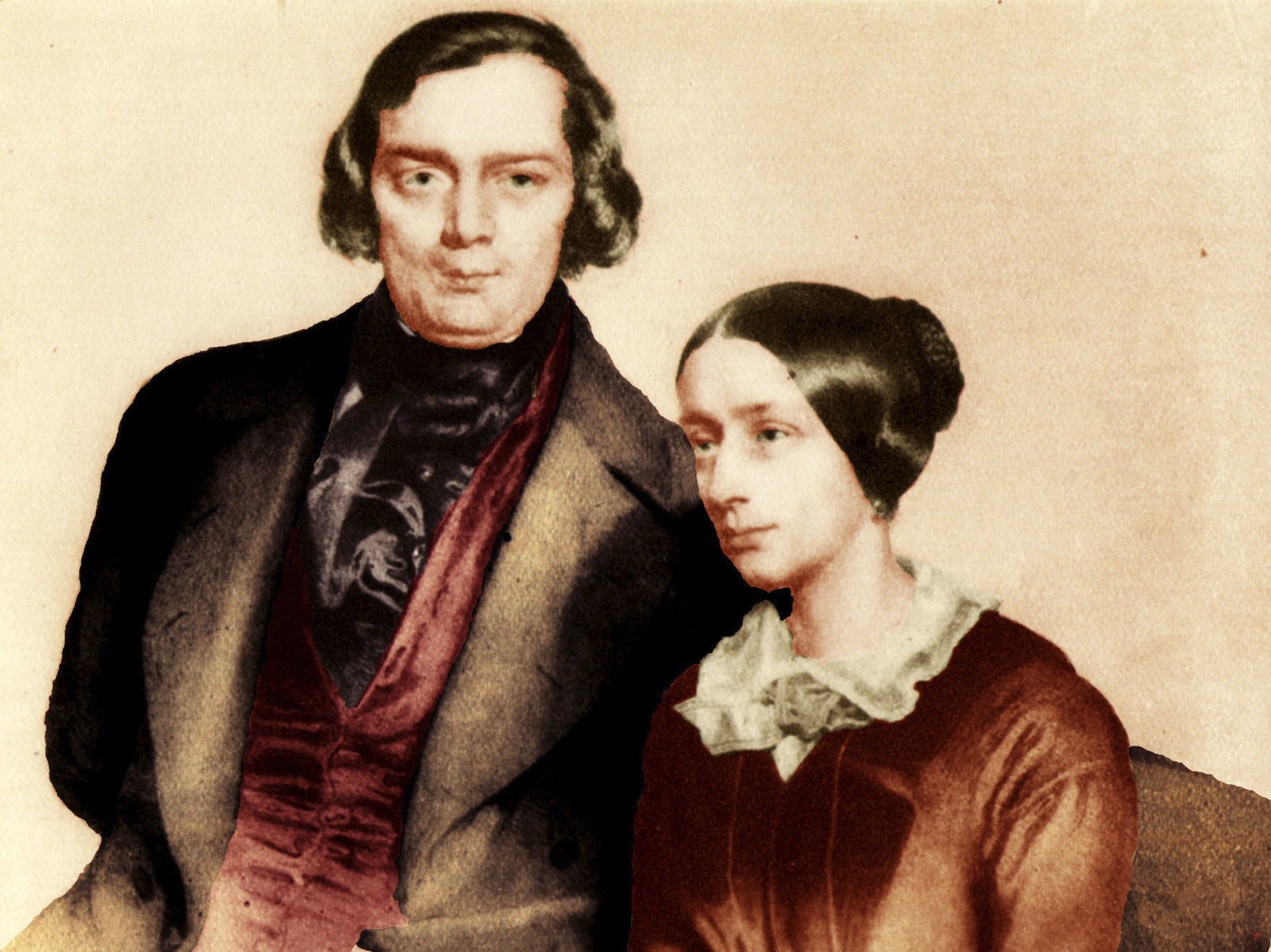
Marriage equaled great happiness … for a while. Robert’s output in this time became prodigious. But for Clara, being wife and mother in addition to touring concert pianist and composer meant something had to give. Her recitals and concert tours were true moneymakers, so it couldn’t be that. Robert himself reflected on the dilemma in the diary they shared.
Clara has written a number of small pieces that show a musical and tender invention that she has never attained before. But to have children and a husband who is always living in the realms of imagination do not go together with composing. She cannot work at it regularly and I am often disturbed to think how many profound ideas are lost because she cannot work them out. But Clara herself knows her main occupation is as a mother and I believe she is happy in the circumstances and would not want them changed.
The couple went on to have eight children over the next fourteen years. Schumann’s reputation as a composer (as well as the renowned editor of the publication, the Neue Zeitschrift — “New Journal of Music”) grew and grew, even as anxiety, depression and instability—even madness—did the same, culminating in him throwing himself into the deep, icy River Rhine in February 1854 at age forty-three. He checked himself into a sanitarium, for fear of hurting Clara or the children, and there he would stay until his death in July, 1856, two and a half years later.
It’s a challenge to try and squeeze in all the details of Clara’s eventful life, which continued forty years beyond Robert’s death. There would be no more composing; she was busy juggling the raising of seven children (baby Emil had only lived for 16 months), a wildly successful concertizing career that lasted over sixty years, as well as editing and organizing all Roberts works and keeping them alive in the public’s eye. In the interest of brevity, here are ten more fascinating facts about Clara Wieck Schumann—piano virtuoso, wife, mother, composer, teacher, internationally renowned figure and all-around amazing woman.

- She did not speak, not even single words, until she was over four years old. When she finally did start speaking, it seemed she understood very little, and the family thought she suffered from deafness too. But her skills on the piano, little songs her father taught her, were amazingly well-executed, proving she could “speak” through the piano, well beyond her years.
- Clara was expected to keep a diary, and until she was eighteen, almost every diary entry was either written or supervised by her father. The latter, bizarrely, was most often written as a first-person point of view as though Wieck himself were Clara. (Example from February 28, 1833: “Father arrived by coach at seven in the evening. I flew into his arms and took him right to the [Hotel] Stadt Frankfurt.”)
- From her youth, Clara learned how to conduct the business aspects of a musical career, using, ironically, her shared diary to copy letters her father had written to vendors, music critics, impresarios, expressing his disfavor, his anger, etc. She would serve as her own manager throughout her adult career, an unusual and time-consuming job for a musician (but certainly more lucrative).
- By eighteen, she had become one of the leading piano virtuosos in Europe. One reviewer rhapsodized, “In her creative hands, the most ordinary passage, the most routine motive acquires a significant meaning, a color, which only those with the most consummate artistry can give.”
- Although after Robert’s death, she was forced to continue concertizing to pay the bills, the truth is, she loved to perform in public; through it she came alive again, in a way like no other. Likely it saved her sanity, over and over.
- She met a very young Johannes Brahms when he came to meet Robert, and the three of them immediately became close friends, Robert praising his music to the skies. The timing was especially profound, as just five months later, Robert commenced his descent into manic behavior, auditory hallucinations—essentially madness—and finally a suicidal jump into the Rhine and being committed to an insane asylum. Johannes stayed by Clara’s side through the challenges to follow. The two of them became close, even intimate in letters, probably “in love” as well (he was quite winsome in his younger years, and he had a thing for older women, a result of his complicated upbringing, which I blogged about HERE) but it was a relationship never consummated. They both loved Robert still. Their lives and psyches were simply too complicated. They did, however, remain beloved, lifelong friends.
- Following Robert’s mental collapse, during his tenure at a sanatorium in the village of Endenich near Bonn, Clara wasn’t allowed to see her husband. (It was Johannes who frequently visited him in her place.) This went on for 2 ½ years, and she was only allowed to visit Robert, finally, because he was nearing death. (He died two days later).
- At 59, she became a principal teacher at the Hoch Conservatory in Frankfurt. It was a sweet deal, that allowed to teach in her own home and permitted time off for touring. She attracted students from all through Europe and North America. While she taught only the advanced students, she was allowed to hire daughters Marie and Eugenie to serve as assistant teachers, to placate the many lesser skilled students who longed to be taught by the great master herself.
- She had a 61-year career as a performing artist all through the 1880s. She toured extensively and regularly throughout Germany, Austria, Hungary, Belgium, Holland, England and Switzerland.
- While Friedrich Wieck seems villainous from a modern perspective, Clara never pushed back against it, later writing that, “My father had to put up with being called a tyrant; however, I still thank him for it every day; I have him to thank for the freshness that has remained with me in my old age (at least in my art). It was also a blessing for me that he was exceedingly strict, that he reprimanded me when I deserved it and in so doing, prevented me from becoming arrogant from the praise the world showered on me. At times the rebuke was bitter, but it was still good for me!”
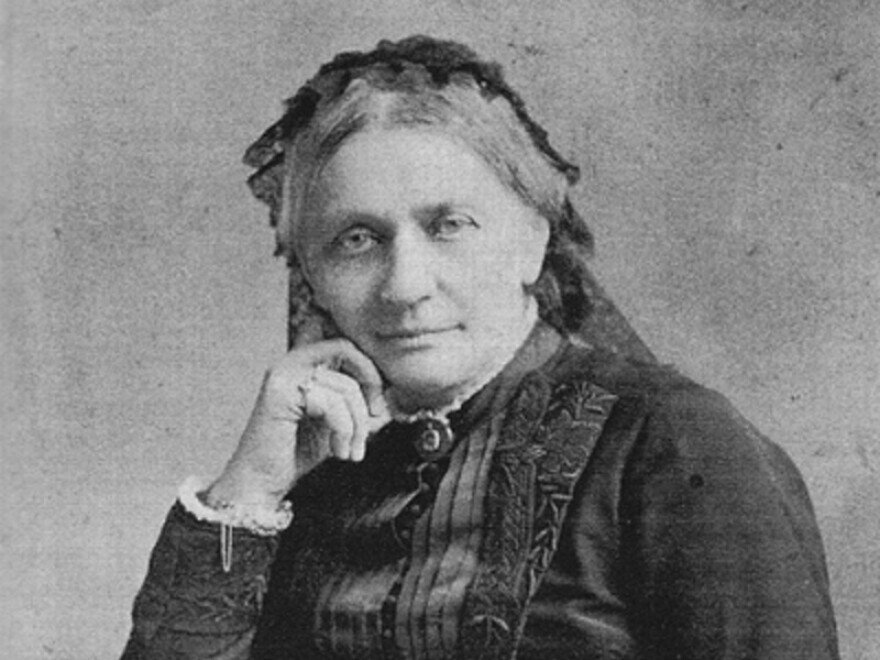
Interested in learning more about Clara? As I mentioned, Nancy B. Reich’s biography, Clara Schumann – The Artist and the Woman, is an excellent read, one I highly recommend. It’s comprehensive, compulsively readable, and my greatest challenge was to spend as much time writing as I did reading, because, in truth, I always just wanted to keep reading and reading. A New York Times article by Thomas May was wonderful and I gleaned all sorts of new facts and perspectives. “Page Turner” by medici.tv has a wonderful article by composer and writer Jack Pepper about both the Schumanns, which again offers great new insight about both the Schumanns. Check them all out — they are as interesting and riveting as fiction. Which describes Clara Wieck Schumann’s life as well, whether she wanted it that way, or not.
What an amazing story!!
Agreed, Kathleen! What an amazing woman and human being.